Plavix and Aspirin After Stent: 8 Years Later - Is Longer Better ...


Post-Capillary Pulmonary Hypertension: What You Should Know
Post-capillary pulmonary hypertension affects the blood vessels after gas exchange has occurred in the lungs. Treatment typically involves addressing the heart condition that's playing a part in the high blood pressure.
Pulmonary hypertension (PH) is when blood pressure is high in the blood vessels that transport blood between your lungs and your heart. Over time, it can lead to further health problems, like heart failure and arrhythmia.
Doctors can classify PH as pre-capillary or post-capillary. Below, we delve into more detail about post-capillary PH. We cover what it is, its symptoms, how doctors diagnose and treat it, and more.
Before we discuss post-capillary PH, it's important to understand how pulmonary circulation works:
Post-capillary PH affects pulmonary blood vessels after gas exchange has occurred. Left sided heart disease causes it, such as:
Left sided heart disease can cause the left side of the heart to pump blood less effectively. This can cause a backflow of pressure into the blood vessels of the lungs, leading to post-capillary PH.
Post-capillary PH due to left sided heart disease is the most common type of PH. Researchers estimate it affects 23–80% of people with left sided heart disease.
Pre-capillary PH affects the pulmonary blood vessels before gas exchange has occurred. The affected blood vessels have typically narrowed or thickened, which increases blood pressure.
There are several potential causes of pre-capillary PH, including:
It's also possible for PH to have both a pre- and a post-capillary component. This is called combined pre-capillary and post-capillary PH. Some cases of post-capillary PH can eventually progress to this type of PH.
The World Health Organization (WHO) has defined four functional classes, or stages, of PH. The classes describe the PH's severity.
The four classes of PH are:
The symptoms of post-capillary PH can include:
Conditions other than PH can cause many of the symptoms above. However, if you're experiencing any concerning symptoms, visit a doctor to find out what's causing them.
Two tests are mainly used to diagnose PH: echocardiography and right heart catheterization.
An echocardiogram creates an ultrasound image of the heart. It can help predict the presence of PH.
Right heart catheterization can confirm the diagnosis. It involves a healthcare professional inserting a catheter into a large vein in your groin, neck, or arm. This catheter goes up to the right side of your heart and into your pulmonary arteries.
Right heart catheterization can make several measurements that give a doctor an idea of the pressure in blood vessels in your lungs. Three measurements are used to diagnose post-capillary PH:
Other tests healthcare professionals may use to diagnose post-capillary PH include:
Treating post-capillary PH often involves addressing the underlying heart issue leading to the increased blood pressure. Medications are one option.
Some of the medications used to address left sided heart disease in post-capillary PH include:
In general, targeted treatments for PAH have not shown the same benefit in people with isolated post-capillary PH. But further studies and the development of novel treatments are ongoing.
Procedures or surgeries may also help some people with post-capillary PH. An example is repairing heart valve disease that's contributing to PH.
Other potential treatments for post-capillary PH include:
Post-capillary PH affects the blood vessels after gas exchange happens in the lungs. It develops from left sided heart disease, such as left ventricular dysfunction or heart valve disease.
Echocardiography and right heart catheterization can help doctors diagnose post-capillary PH. Treatment mainly involves addressing the heart disease contributing to the high blood pressure.
PH can lead to complications like heart failure and arrhythmia, so it's important to talk with a doctor if you have symptoms like shortness of breath, fatigue, or persistent cough.
A doctor can work with you to determine what's causing your symptoms and develop an appropriate treatment plan.
Endotronix Receives IDE Approval For The Market Expanding PROACTIVE-HF 2 Clinical Trial
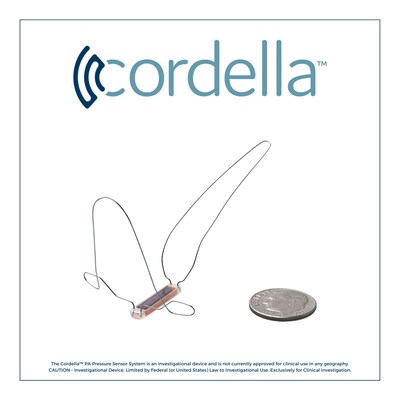
NAPERVILLE, Ill., Oct. 9, 2023 /PRNewswire/ -- Endotronix, Inc., a digital health and medical technology company dedicated to advancing the treatment of heart failure (HF), announced it has received Investigational Device Exemption (IDE) approval from the FDA for a subsequent multicenter study, PROACTIVE-HF 2, which will evaluate the company's Cordella Sensor for pulmonary artery (PA) pressure-guided therapy. The prospective, dual-arm trial aims to expand access to New York Heart Association (NYHA) class II HF patients and support efficient and scalable remote patient management with a clinician-directed, patient self-management strategy.
"The evidence in favor of PA pressure-guided therapy for NYHA class III HF patients has been consistently validated over the last 15 years. However, questions remain as to the therapy benefit in NYHA class II patients and how to best scale effective remote HF management," stated Lynne W. Stevenson M.D., Heart Failure Specialist at Vanderbilt University Medical Center in Nashville, TN, and Global Principal Investigator (PI) of the PROACTIVE-HF 2 clinical trial. "The randomized arm of PROACTIVE-HF 2 will be the first study to compare PA pressure-guided therapy to a telehealth control arm. The single-arm cohort evaluates the power of engaged patients and subsequent impact on outcomes. Together these studies help us better understand the impact of pulmonary hypertension on right ventricular function over time and provide guidance on how to scale this important therapy with patient engagement."
The PROACTIVE-HF 2 prospective, open-label randomized controlled clinical trial will enroll up to 1,500 patients in the U.S. And Europe. The dual arm study design was presented over the weekend at HFSA and the first patient is expected to be enrolled later this year. The randomized arm will assess the safety and efficacy of PA pressure-guided therapy using Cordella in NYHA class II patients at risk for congestion. In both cohorts, patients and clinicians will have access to daily trended telehealth data (i.E. Blood pressure, heart rate, and weight) and the treatment cohort will also have access to daily PA pressure data. The study will evaluate safety and efficacy, using a compositive first HF event or death rate, for up to 24 months. The single-arm study will assess the impact of clinician-directed patient self-management at home in NYHA class III HF patients who are at risk for poor outcomes using a 12-month endpoint for safety and incidence of HF hospitalization or death. Both arms will collect data on secondary endpoints including changes in right ventricular function in relation to PA pressure, and patient engagement.
Additionally, the Company presented 12-month sub-study data from its initial pivotal PROACTIVE-HF trial at the HFSA conference, demonstrating a low HF hospitalization rate of 0.34 at 12 months in NYHA class III HF patients. In December 2021, the prospective, multi-center pivotal PROACTIVE-HF trial was redesigned from a randomized controlled trial, with patients and providers in a control arm blinded to PA pressure values, to a single-arm study where both groups had access to patient data. The data for 63 former control arm patients was evaluated before and during the 12-month period following the unblinding, demonstrating significant improvements in mean PA pressure (mPAP) and outcomes, as well as strong patient interest in having access to PA pressure data.
This data dovetails the announcement that the PROACTIVE-HF study has completed its primary endpoint follow-up period and the data is being prepared for pre-market approval (PMA) submission to the FDA by the end of the year and data presentation in the first half of next year.
"We are establishing a strong foundation of compelling clinical evidence for Cordella with early PROACTIVE-HF data. The team is driving towards PMA submission before the end of this year and looks forward to sharing the results from the full study cohort in 2024," commented Harry Rowland, CEO and co-founder of Endotronix. "We remain confident in the benefits Cordella brings to patients and clinicians to improve heart failure outcomes and remain on track for a mid-2024 launch."
About EndotronixEndotronix innovates at the intersection of Medtech & Digital Health to improve care for people living with heart failure (HF). The comprehensive Cordella solution enables proactive, data-driven HF management that engages patients, reduces and prevents congestion, and improves outcomes. The Cordella Sensor is an implantable pulmonary artery (PA) pressure sensor that directly measures the leading indicator of congestion, allowing early, targeted therapy. The Cordella HF System is a patient health management platform, which combines comprehensive vital sign data from non-invasive devices to support patient-clinician engagement and care decisions. Combining trended insights, the versatile and scalable Cordella enhances current clinical practice and supports guideline-based care across the entire HF continuum. Learn more at www.Endotronix.Com.
The Cordella PA Pressure Sensor System is an investigational device and is not currently approved for clinical use in any geography. CAUTION – Investigational Device. Limited by Federal (or United States) Law to Investigational Use. Exclusively for Clinical Investigation. The Cordella HF System, without the sensor, is available for commercial use in the U.S. And E.U.
Cautionary Statement Regarding Forward-Looking Statements
This press release may contain predictions, estimates or other information that might be considered forward-looking statements. Such forward-looking statements are not a guarantee of future performance.

 View original content to download multimedia:https://www.Prnewswire.Com/news-releases/endotronix-receives-ide-approval-for-the-market-expanding-proactive-hf-2-clinical-trial-301949068.Html
SOURCE Endotronix, Inc.
Precapillary Pulmonary Hypertension: What You Should Know
This type of pulmonary hypertension can be caused by pulmonary arterial hypertension, lung disease, or blood clots in the lungs. Treatments include medications, lifestyle changes, and surgery.
Pulmonary hypertension (PH) is a condition meaning the blood pressure in the blood vessels of your lungs is too high.
About 1% of people worldwide have PH, according to the National Heart, Lung, and Blood Institute. Over time, the condition can lead to heart failure and arrhythmia.
PH can be divided into precapillary and postcapillary PH. This article explores precapillary PH in more detail.
When oxygen-depleted blood reaches the heart, it travels through the right side of the heart and into the pulmonary arteries. From the pulmonary arteries, it continues to move through smaller and smaller blood vessels.
Blood eventually reaches the capillaries surrounding the alveoli in your lungs. This is where gas exchange occurs, in which blood receives fresh oxygen while removing wastes like carbon dioxide.
Precapillary PH affects the pulmonary arteries before the oxygen-depleted blood reaches the capillaries in the lungs. It can be caused by:
Pulmonary arterial hypertension (PAH) is a type of precapillary PH. It happens when small arteries within the lungs become narrowed or obstructed, leading to an increase in blood pressure.
Various factors can cause PAH, including:
Sometimes, the cause of PAH isn't clear. When this happens, it's referred to as idiopathic PAH. More than 50% of diagnoses of PAH are idiopathic.
The symptoms of PH, including precapillary PH, are typically nonspecific. They could be caused by various health conditions, including other lung and heart issues.
Symptoms may include:
A doctor will ask about your medical history and do a physical exam. Several tests may also be used during the diagnostic process, such as:
Two techniques can help determine the blood pressure in your pulmonary arteries. An echocardiogram creates an ultrasound image of the heart and can estimate pressure in your pulmonary arteries.
Cardiac catheterization is an invasive procedure and is done to confirm the diagnosis. It involves inserting a catheter into a large vein in your groin, neck, or arm. This is then threaded to the right side of your heart and pulmonary arteries to measure blood pressure.
Precapillary PH is specifically diagnosed based on the following measurements:
There's no cure for precapillary PH, but treatment can help you manage it and prevent your symptoms from worsening.
The treatments for precapillary PH include:
Sometimes, precapillary PH is caused by an underlying health condition, such as an autoimmune disease. If this is the case, your doctor will work to treat that as well.
Precapillary PH is a condition in which high blood pressure affects the pulmonary arteries before reaching the capillaries in the lungs. It can be caused by various factors, including PAH, preexisting lung disease, or CTEPH.
Several tests can diagnose precapillary PH. Echocardiogram and cardiac catheterization are two that are essential for determining blood pressure in the pulmonary arteries.
There's no cure for precapillary PH, but treatments can manage symptoms, prevent the condition from worsening, and improve quality of life.


Comments
Post a Comment